
Best Thai Street Food to Try in Bangkok (and Where to Find It)
Bangkok’s street food is a legitimate reason to visit on its own — some of the city’s best meals cost less than a coffee back home. Here’s what to actually order, and where locals go for it.

The dishes worth seeking out
Dish | What it is | Where to look |
Pad Thai | Stir-fried rice noodles with egg, tofu or shrimp, tamarind sauce, peanuts | Almost anywhere, but Thipsamai near the Golden Mount has a decades-long reputation for it |
Boat noodles (kuay teow reua) | Rich, dark, intensely flavored noodle soup, traditionally served in small bowls so you order several rounds | Victory Monument’s boat noodle alley is the classic spot |
Som tum | Spicy green papaya salad, pounded to order | Any Isaan-food stall — look for the mortar and pestle in action |
Moo ping | Grilled pork skewers, sweet-savory marinade | Street carts everywhere, especially near markets in the morning |
Khao soi | Northern-style curry noodle soup (more a Chiang Mai specialty, but found in Bangkok too) | Northern Thai restaurants and some street stalls |
Mango sticky rice | Sweet coconut sticky rice with fresh mango | Dedicated dessert carts, especially plentiful near tourist areas |
Khao pad | Thai fried rice, endlessly customizable | Any street wok stall — a reliable, mild option if you need a break from spice |
Where to eat, not just what
Chinatown (Yaowarat). The single best concentration of street food in the city, especially after dark — come hungry and order in small portions from multiple stalls rather than filling up at the first one.
Or Tor Kor Market. Less street-stall, more upscale market — a good option if you want high-quality ingredients and prepared food in a calmer, indoor setting.
Talad Rot Fai (train night markets). Food stalls mixed with vintage shopping and a more local, less tourist-saturated crowd than the central night markets.
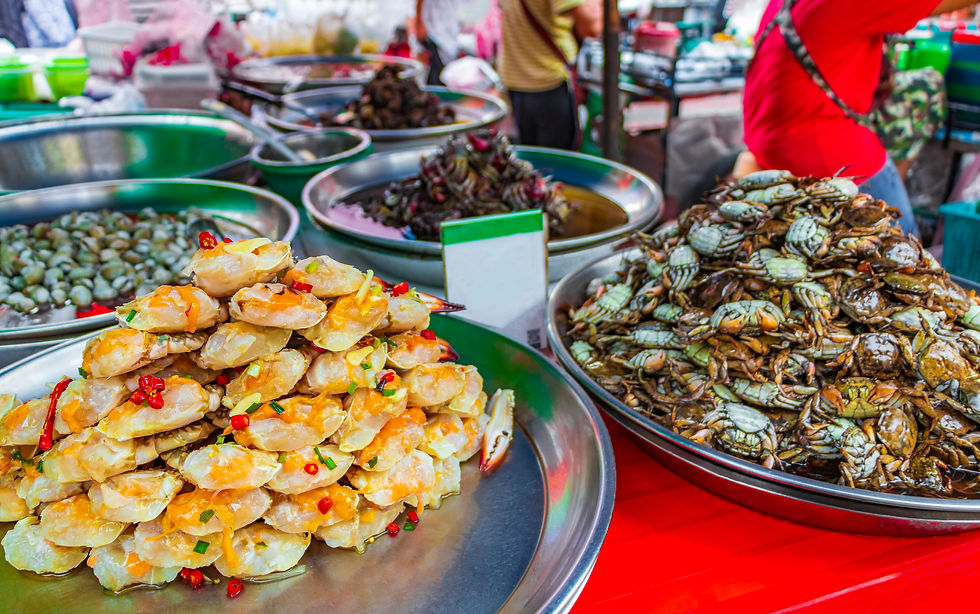
Eating street food safely
Look for stalls with high turnover and a steady stream of local customers — that’s the best real-time signal of freshness. Bottled or boiled drinks are the safer default over ice from an unknown source, though ice from reputable stalls in tourist areas is generally fine.
Our take
Skip the sit-down “street food experience” restaurants aimed at tourists and head to Chinatown after dark instead — order small portions from several stalls rather than one big meal at the first cart you see, and follow the local crowds rather than the English-menu signs.
Frequently asked questions
Is Bangkok street food safe for visitors? Generally yes, especially at busy stalls with high turnover — use common sense (avoid empty stalls, prefer freshly cooked food) rather than avoiding street food altogether.
How spicy is Thai street food actually? It varies widely by dish and region — Isaan dishes like som tum tend to run hotter; if you’re spice-sensitive, ask for “mai phet” (not spicy) when ordering.
Is a food tour worth it, or can I just wander and order myself? Both work well — a tour is useful if you want context and don’t want to navigate menus without English, but confident eaters can do just as well wandering Chinatown and pointing at what looks good.


Comments